Shanghai RECON 7% Series Reactor Solves Harmonic Capacitor Failure
更新时间:2026-07-23 22:25:13•点击:1834 • Question
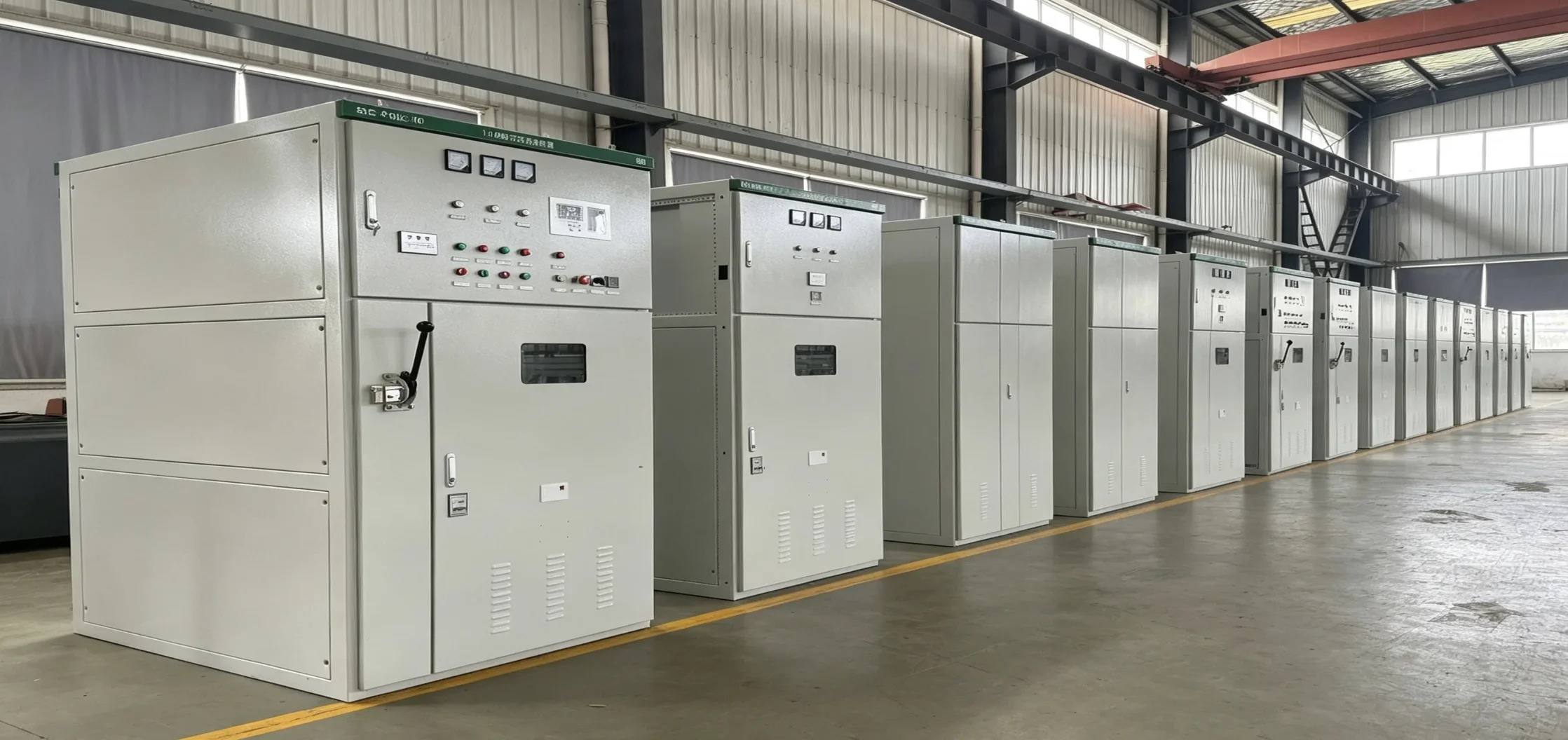
In industrial production, reactive power compensation is a standard method to improve power factor and reduce line losses. However, with the widespread use of non-linear loads such as VFDs, rectifiers, and induction furnaces, harmonic pollution in the power grid is becoming increasingly severe. Many enterprises find that their normally functioning shunt capacitor banks frequently experience bulging, leakage, or even explosion, and the compensation cabinets trip unexpectedly.
Harmonics — The "Invisible Killer" of Shunt Capacitors
A shunt capacitor presents a capacitive impedance, where the capacitive reactance is inversely proportional to frequency: XC = 1 / (2πfC). When harmonics exist in the grid, for specific harmonic orders (especially 5th and 7th), the capacitor exhibits very low impedance, creating a path for harmonic currents. Large amounts of harmonic current surge into the capacitor, causing severe overcurrent and overheating, far beyond its rated capacity.
More dangerously, when the system parameters happen to resonate near a specific harmonic frequency, harmonic currents can be amplified several times or even tens of times. In such cases, the capacitor rapidly heats up and its insulation breaks down — at best the capacitor is destroyed, at worst it causes fire and widespread blackouts. This is the real reason why many capacitors "unexplainably" fail.
The Key Role of Series Reactors
The most effective solution to harmonic-induced capacitor damage is to connect a reactor with appropriate reactance rate in series with the capacitor bank. The reactor and capacitor together form an LC filter branch that remains capacitive at fundamental frequency (maintaining reactive power compensation) while significantly increasing impedance at specific harmonic frequencies, blocking harmonic currents from entering the capacitor.
In engineering practice, a 7% reactance rate series reactor is the most widely adopted solution. A 7% reactance rate means the inductive reactance of the reactor equals 7% of the capacitive reactance of the capacitor. With 7% reactance, the LC series branch has a resonance frequency of approximately 189Hz, effectively suppressing 5th and higher-order harmonics while avoiding resonance at the 3rd harmonic frequency.
RECON Shanghai — Professional Quality You Can Trust
Shanghai RECON has been dedicated to the reactor field for many years, specializing in inverter-duty reactors and series reactors. With advanced production equipment and testing facilities, all products are designed and manufactured in strict compliance with IEC and national standards, serving thousands of industrial and mining enterprises.
The RECON CKSG series series reactors are specifically designed for shunt capacitor matching, offering the following advantages: Precise matching — reactance rate strictly controlled within 7%±3%; Quality materials — high-permeability cold-rolled silicon steel and quality copper wire; Safety and reliability — built-in overheat protection, strict withstand voltage and temperature rise testing; Custom service — personalized reactor selection recommendations based on actual site conditions.
Case Study: From Explosions to Zero Failures
A plastics plant had a 300kVar shunt capacitor bank for reactive power compensation. Due to extensive use of VFDs, 5th and 7th harmonic levels were severely超标. After just three months, the capacitor bank had been replaced three times, with the worst incident involving a capacitor explosion and cabinet trip. After RECON engineers conducted on-site measurements, 5th harmonic distortion was found to be 28% and 7th at 15%, far exceeding national limits. The solution: install RECON CKSG-7% series reactors in front of the capacitor bank.
After the upgrade, power factor stabilized above 0.95, capacitor operating temperature dropped from 65°C to 45°C, and harmonic distortion fell below 5%. The system has been running for over two years with zero capacitor failures or trips. The plant's electrical manager remarked: "If I had known series reactors worked this well, we wouldn't have wasted money on replacement capacitors."
Shanghai RECON — making every kilowatt-hour safe and reliable.
Recommended Reading
-
RECON Shanghai Ruikang All-Copper 10kV HV SVG Reactors Delivered
2026-07-25 11:58:49•1752 次
-
Shanghai RECON 7% Series Reactor Solves Harmonic Capacitor Failure
2026-07-23 22:25:13•1834 次
-

Air-Core Shunt Reactor: The Invisible Guardian of Grid Safety
2026-05-04 19:41:17•3743 次
-

HV Air-Core Current-Limiting Reactor: Applications and Technical Advantages
2026-05-04 18:11:58•3660 次


